Two weeks ago Star Wars: The Old Republic launched game update 7.8.1, “Master’s Enigma” the next chapter of the Legacy of Sith’s main story. The expansion is building to its conclusion, and there is a lot to explore. I’d like to focus on two aspects of the latest update. The first is relatively light on spoilers, but the second section of this post will discuss the major twists in the expansion’s penultimate chapter.

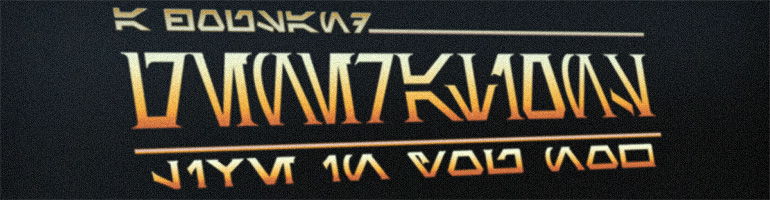
Let’s start in my wheelhouse with a translation of some alien text. Inside a control center of one of the nature preserves on Darth Nul’s lost ship, the Enigma, there are two obsidian monoliths covered in symbols and text erected on opposite sides of the room. Although the inscriptions on both are identical, one is cracked and leaking red energy, the other blue.
I’ve discussed the history and origins of this runic alphabet before so I won’t go into detail here. It is enough to know that this writing is ancient even within the context of the Old Republic and was used by both the Jedi and the Sith on their artifacts, technology and monuments. This is reflected in how it appears in SWTOR and in this chapter. The way the two monuments are accented by blue and red clearly echoes both the colors of the Jedi and Sith and the holograms with which we interact during the story.

This Pictish runestone from the village of Aberlemno in Scotland dates to the second half of the first millennium AD.
This monument was called a “stele” when it was introduced into the game as a stronghold decoration. Stelae are large stone monoliths which, throughout history and across many cultures, were used as territorial markers, commemorations of battles or to publish laws or decrees. It’s within this last context that I think the pair on Darth Nul’s ship lie.
The text on both is the final line of the Jedi Code, but not the version that is most commonly cited within SWTOR and Star Wars stories. The Jedi Code has caused consternation to both Star Wars fans and characters in the lore over the years, and I’m certain Reniah/Nul are included in that company. Regardless of which version of the code you prefer, it is filled with contradictions. We all have emotions, and death is all around us.

Decorations of the Stele of the Lost Master, flanked by the Jedi Consular Meditation Pillar and the Jedi Knight Meditation Pillar.
I would describe the Jedi Code not as a set of rules, but instead as what is known in Zen Buddhism as a “Koan.” Briefly, Koans are contradictory statements or unanswerable questions. “What is the sound of one hand clapping?” is a famous example. The point is not to make sense of the question, but to move past its contradictions into deeper insight and meditation.
Likewise, the Jedi Code does not present a logical explanation of the Force. Instead it is meant to break through a Jedi’s conceptual thinking about the Light and the Dark sides and then provoke a personal realization into the nature of the Force and the connection everyone shares with it.
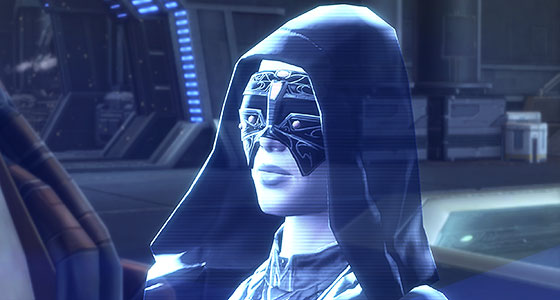
Darth Nul, still causing trouble all these years later.
I can very much imagine Jedi Reniah and Darth Nul finding this explanation wholly inadequate. This is reflected in the failure of their attempts to impose balance on the biomes we explore on Nul’s ship. The solution is to simply let things be. Whether as Reniah or Nul, they are unable to accept that they cannot force the result they want.
If you forgive a tangent to the Dark Side, the Sith code is easier to follow to be sure, but even Nul is aware of its limitations and acknowledges there are multiple different paths to power.
All of this reinforces Darth Nul’s ultimate desire to destroy the structures of the Jedi and the Sith, not because, I would argue, they are inherently broken but because she refuses to understand them. My position is not that the Jedi are without fault. An entire trilogy of movies is devoted to the failures of the Jedi Order. I grant that the Sith are broken, but the motives of Darth Nul and Darth Malgus, who aims to complete Nul’s work, cannot be trusted even if you agree with their actions or goals.
Curse Your Sudden But Inevitable Betrayal
Beware, dear reader, we dive next into full spoiler territory from here on out!

Darth Jadus is pleased to see us again.
The chief theme explored in The Master’s Enigma is that of betrayal. The chapter opens and concludes with the siblings Sa’har and Ri’kan. Ri’kan has given his complete loyalty to Heta Kol, a charismatic leader bent on revenge and destruction. Ri’kan has devoted his life to Heta and her cult-like clan even to the point of rejecting the love of the last of his family. It breaks Sa’har’s heart to again lose her brother. We see it’s all for nothing. Heta demands unquestioned loyalty and repays it with a knife to Ri’kan’s throat. Again and again, Heta has demonstrated that she regards her followers as tools to be used and discarded. Nothing can trump her obsessions.
Players also suffer personal betrayals both at the beginning of the chapter and, of course at the end. Each is different depending on our characters’ faction.
All players begin with an encounter with the leaders of their respective factions. They, for various reasons, have had enough with our characters’ independence from their control. My Imperial character is a “saboteur” so I relish every opportunity to butt heads with the Dark Council. My light side Jedi was more frustrated and annoyed by the Republic’s lack of faith. Clearly the Republic replaced General Daeruun with the openly antagonistic Admiral Rava because the ol’ tea sipping general actually gets on well with us. That said there is value in characters that everyone loves to hate. That’s something Republic leadership has lacked since Chancellor Saresh exited the stage. I look forward to being a thorn in Rava’s side in the days to come.

Darth Rivix. I can fix him.
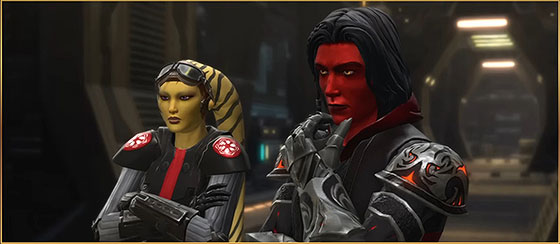
Let’s turn to the revelation from the Sith story next. Darth Rivix has been in cahoots with Darth Jadus, very likely all along. What I like about this is that it really should not come as a shock to anyone. Indeed, the obvious untrustworthiness of Rivix is a big part of the appeal of his character, to me at least. From the moment we met, I pegged him as trouble. If you ever want to know where Darth Rivix is, just follow the trail of dead bodies and broken hearts he most definitely leaves in his wake across the galaxy.
He doesn’t even attempt to justify his betrayal. We knew he was a scorpion when we picked him up. With this sordid business of allegiances out of the way, perhaps now we can really get to know him.
For Republic players, Tau Idair’s betrayal is much sadder. I played “Master’s Enigma” as an Imperial first, and once it became clear that Tau was filling the same role in the Republic story as Rivix, I said aloud “Aw, Tau. Don’t.” But she did. From the first day we met her on Ossus, we’ve seen that Tau has suffered from survivor’s guilt. Through all of our interactions, my character and Gnost Dural have encouraged and supported Tau, but it is tragic to see her succumb to despair. This is exactly the kind of thing Jadus would gladly exploit for his own benefit. Jadus is definitely one of those chuds who views empathy as a weakness.

Tau cannot hide her guilty conscience.
But it’s not. Our characters boarded the Enigma knowing that it was a trap. Simply having irresistible bait does not make Jadus a tactical genius. He does seize control of Nul’s holocron, but it is the nature of a plot’s MacGuffin to be passed around like a hot potato. I don’t see him being able to control the holocron any better than Krovos or Sal-Deron did. At the end of this chapter we escape because of Lana’s loyalty to our characters, Arn Peralun’s empathy for Tau, and Major Anri’s stubborn defiance of orders.
As for what happens next? I certainly don’t know. At the very least, it sounds like it’ll be quite the reckoning. I can’t wait to see what will be born from the chaos that has been brewing this whole expansion.